Wallpaper installation · 96 Morton St, New York, NY 10014[email protected]

Services

Wallpaper services in New York, NY

Six ways we help with walls — from hanging a single statement mural to stripping and re-papering a whole apartment. Each one starts with the same question: what does this wall need before anything goes on it?

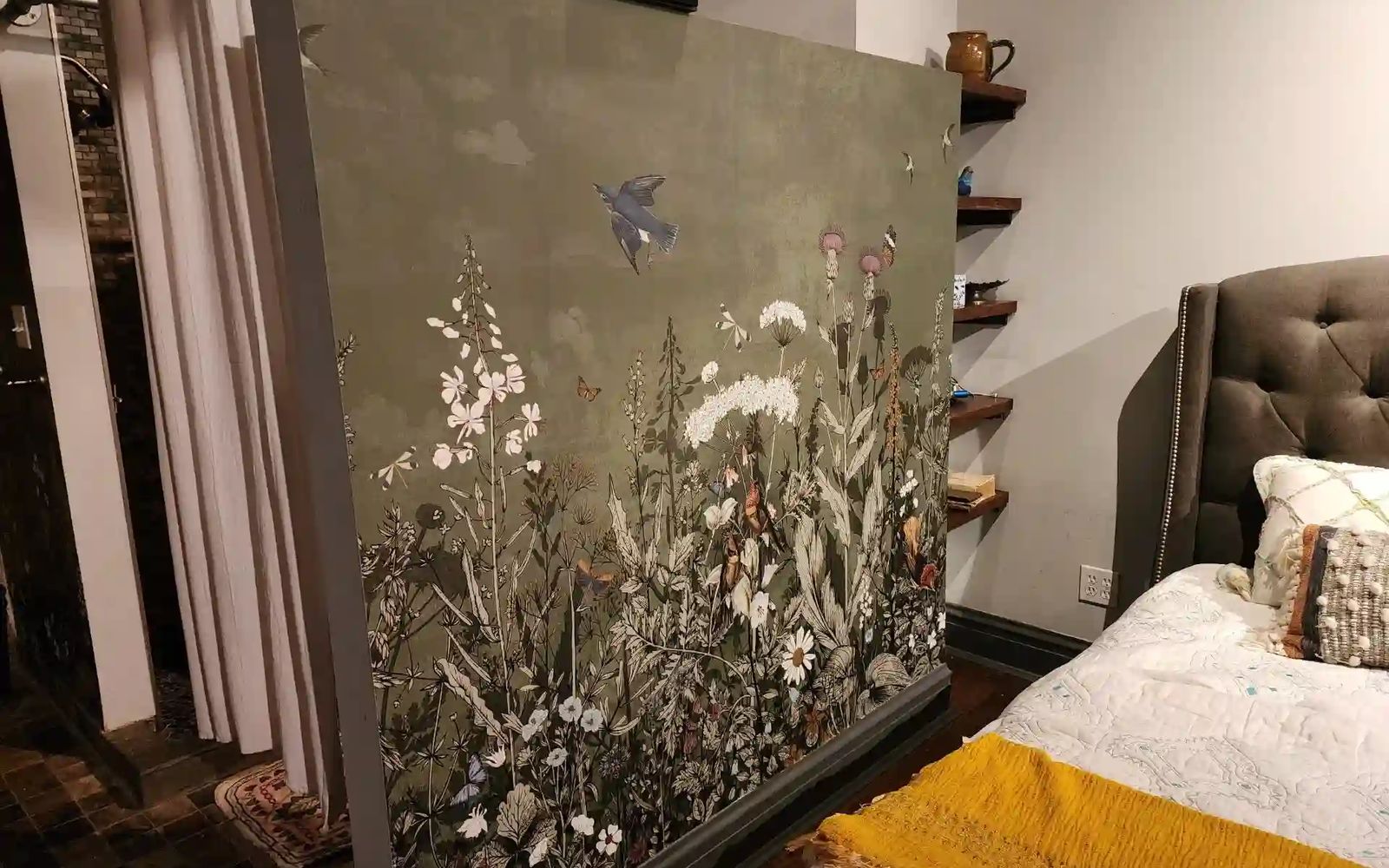
Bedroom wall covered in a sage-green wildflower mural with white blooms, next to a tufted headboard
Bedroom accent wall in a soft brown textured wallcovering under a linen drum pendant
No. 01

Wallpaper installation

This is the heart of what we do. We hang traditional paste-the-wall and paste-the-paper wallpapers, non-woven and vinyl wallcoverings, textured papers and prints — on accent walls, full rooms, stairwells and ceilings.

A good installation is mostly decisions made before the first cut: where the first drop goes so the pattern lands nicely at eye level and around windows, which way the match runs, how corners and outlets will be handled, and where the last, least-visible seam should fall.

  • Plumb first drop and a planned layout for the pattern repeat
  • Straight, half-drop and random matches lined up across every seam
  • Adhesive chosen for the specific paper and wall
  • Clean cuts at ceilings, baseboards, trim, switches and outlets
Ask about an installation

Why removal is a separate job

Old wallpaper can hide glue, torn drywall paper and earlier paint layers. Hanging new paper over it risks bubbles, lifting seams and a pattern that never sits flat. Removing it properly is often the best investment in the new wall.

If you’re not sure whether existing paper can stay, call us and describe it — we’ll talk through the options.

No. 02

Wallpaper removal

We take down old wallpaper — strippable, peelable, vinyl-faced or the stubborn layered kind — while protecting the surface underneath as much as the wall allows. Floors and furniture are covered first, and adhesive residue is washed off so the wall can be repaired, primed and papered or painted.

  • Testing how the paper releases before committing to a method
  • Scoring, soaking or steaming only where it’s actually needed
  • Residue cleanup so new paint or paper bonds properly
  • Damaged spots noted and discussed before repair
Bedroom wall in a botanical print with green leaves and pale pink flowers
No. 03

Peel-and-stick wallpaper

Self-adhesive wallpaper is popular with renters and anyone who wants to change a room without a big commitment. It looks simple, but long drops are easy to stretch, misalign or trap air under — and it needs a clean, smooth, fully cured surface to stay put.

We check the wall first (fresh paint usually needs time to cure before peel-and-stick goes on), then apply panel by panel with the overlap or butt joint the product calls for.

  • Surface check for texture, dust and paint sheen
  • Straight overlaps or seams and smooth, bubble-free panels
  • Neat trimming around trim, windows and fixtures
Wall with a soft cream and tan striped wallpaper above a sage-green slatted wainscot, floor still protected
No. 04

Wall preparation

Most wallpaper problems start under the paper. Older New York walls can be plaster with hairline cracks, patched drywall or many coats of glossy paint — all of which change how a paper grips and dries.

  • Filling cracks, holes and dents; skim-coating where the surface is rough
  • Sanding and dust removal
  • A wallpaper primer suited to the paper and wall, which also makes future removal easier
  • Checking for moisture issues in bathrooms and exterior walls before papering

Prep needs vary a lot from wall to wall, which is one reason we like to talk about the surface early.

Helpful to share for commercial work

  • The type of space and roughly how many walls
  • Preferred working hours or days
  • Any building or management requirements for contractors
  • Whether the wallcovering is already specified
No. 05

Commercial wallpaper installation

We install wallcoverings for offices, retail stores, restaurants, salons and residential building lobbies and corridors. Commercial-grade vinyls and textiles are heavier than residential papers and often come in wider widths, so handling, adhesive and seam placement are planned accordingly.

Many Manhattan buildings have rules about when contractors can work, elevator use and paperwork. Tell us about yours when you call and we’ll plan around them.

Black-and-white landscape mural of a large spreading tree covering a room wall
No. 06

Grasscloth, murals & specialty wallcoverings

The materials that define an earthy look are often the most demanding to hang. Grasscloth, sisal and other natural weaves stain easily from paste and show color shifts between rolls. Panel murals must be hung in exact sequence so the scene lines up. Textured, metallic and hand-printed papers each have their own handling rules.

  • Grasscloth and natural fibers: roll order planned, paste kept off the face
  • Murals: panels laid out and checked before hanging, horizon kept level
  • Delicate and specialty papers handled per the manufacturer’s instructions
Compare specialty materials

Estimates

What shapes the cost of a wallpaper project

Every wall is different, so we estimate per project. These are the things that usually make the biggest difference:

Size & height

Wall area, ceiling height and stairwells that need ladders or scaffolding.

Wall condition

Old paper to remove, cracks to repair, skim-coating or priming needed.

The material

Grasscloth, murals and heavy commercial vinyls take more time than standard papers.

Pattern & repeat

Large repeats and half-drop matches mean more planning and more waste.

Cut-outs & details

Windows, built-ins, radiators, outlets and angled walls add careful trimming.

Access & scheduling

Building rules, working hours and how much furniture needs moving.

Questions about your walls or wallpaper? Let’s talk.

Call (929) 706-0493 or send a short request — whatever details you have are enough.

Request an Estimate